|
|
|
|
|
|
|
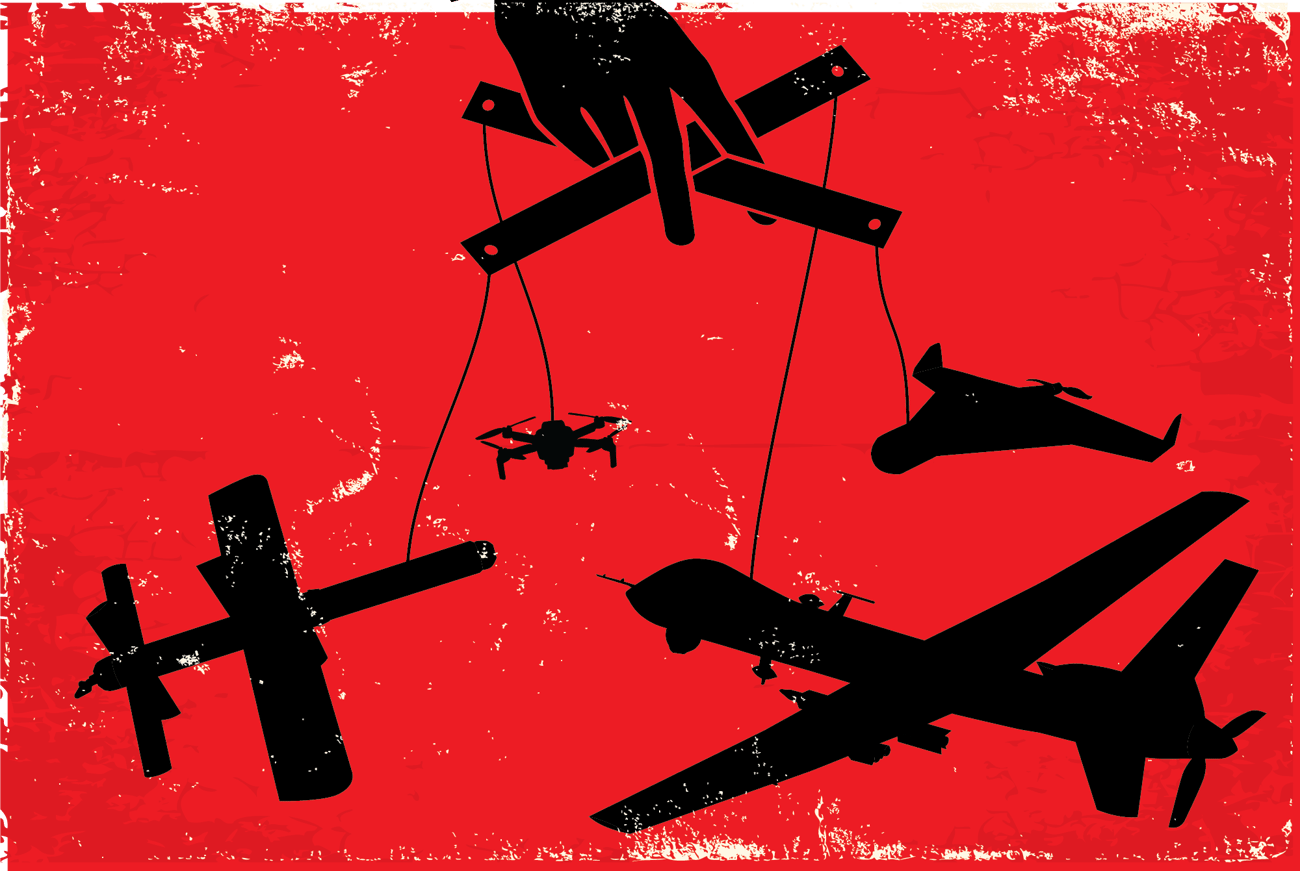
Drone technology has spread from great powers to smaller states and non-state actors, changing the character of war. (Illustration by Thomas Gaulkin; images via depositphotos.com) |
|
|
|
|
|
"In the early 2000s, it would have been unthinkable for small insurgent groups to develop sophisticated drone-building programs and deploy unmanned aircraft against their opponents," writes Steven Feldstein. "A generation later, this technology has become cheaper and far more accessible." Read more. |
|
|
|
|
|
Even a very limited space-based defense system would cost the United States hundreds of billions of dollars and would have no meaningful defensive capabilities, write Lisbeth Gronlund and David Wright. "Still, hope springs eternal, as does the Pentagon's ability to ignore lessons from the past."
Gronlund and Wright, both researchers at MIT's Laboratory for Nuclear Security and Policy, break down why the prospect of a space-based defense system isn't all it's cracked up to be. Read more. |
|
|
|
VIDEO |
|
|
|
"If we get the nuclear problem wrong, nothing else matters." Bulletin President and CEO Alexandra Bell discusses concerns surrounding nuclear policy and other existential threat issues that factored into the 2026 Doomsday Clock conversation. Watch here. |
|
|